

Table of Contents
Introduction: Why Branding Matters for Small Business?
In the modern digital economy, one of the most important questions every entrepreneur must ask is: why branding matters for small business? This question is not a passing thought but a strategic consideration that shapes the future of any enterprise. Branding is more than a logo, tagline, or color palette — it is the emotional and strategic identity that connects a business to its audience. For small businesses, especially in competitive markets like Bangladesh, branding is the difference between being noticed and being overlooked.
When we ask why branding matters for small business?, the answer begins with identity. Branding defines who you are, what you stand for, and how customers perceive you. A strong brand communicates professionalism, reliability, and authenticity. It transforms a simple product or service into a memorable experience. Without branding, even the most innovative ideas risk fading into obscurity. With branding, small businesses gain recognition, build trust, and establish credibility.
Another dimension of why branding matters for small business? lies in trust. Customers are more likely to engage with businesses that present themselves consistently across platforms. Whether through a website, social media, or physical storefront, branding creates a unified message. This consistency signals reliability, making customers feel confident in their choices. For example, a small café in Dhaka that uses consistent colors, storytelling, and customer engagement will naturally build stronger trust than competitors with scattered, inconsistent branding.
Emotional connection is also central to answering why branding matters for small business? Customers don’t just buy products; they buy into stories, values, and experiences. Branding allows small businesses to share their journey, struggles, and successes, creating relatability. This emotional bond transforms one‑time buyers into loyal advocates. Personal branding, in particular, empowers entrepreneurs to connect authentically with their audience, turning their own story into a powerful marketing tool.
In today’s digital economy, why branding matters for small business? is also tied to visibility. Search engines and social media platforms reward businesses with strong, consistent branding. From local SEO services to affordable SEO services, branding integrates with every aspect of digital marketing. A clear brand identity ensures that small businesses are not only found online but remembered.
Professional execution further emphasizes why branding matters for small business? While entrepreneurs can begin branding themselves, agencies bring expertise and polish. A branding agency ensures logos, websites, and campaigns are aligned with business goals, saving time and elevating credibility. This investment pays off in both recognition and growth.
Ultimately, the question why branding matters for small business? is answered by the cycle of identity, trust, and growth. Branding defines who you are, builds credibility with customers, and sustains long‑term success. It is not a one‑time effort but an ongoing strategy that adapts to evolving markets. For small businesses in Bangladesh and beyond, branding is the key to thriving in competitive environments and connecting with audiences worldwide.

1. What is Branding?
- Definition: Branding is the process of creating a unique identity for a business.
- Scope: It includes logo branding, branding design, and branding services.
- Subtopics:
- What is branding in marketing?
- What is branding in graphic design?
- What is branding in entrepreneurship?
- What is branding and identity design?
- Branding agency examples show how professional branding services elevate small businesses.
2. Why Branding Matters for Small Business
- Builds credibility and trust.
- Differentiates from competitors.
- Supports local SEO services for small businesses.
- Enhances digital marketing agency strategies.
- Case study: small businesses in Bangladesh using affordable SEO services for small businesses.
3. Personal Branding and Entrepreneurial Growth
- Why personal branding matters.
- Branding yourself as a founder.
- Employer branding and school branding matters.
- Online branding matters for visibility.
4. Elements of Branding Design
- Logo branding and branding mockups.
- Branding logo variations.
- Website branding for small businesses.
- Easy branding for small businesses tips.
5. Branding Strategies for Small Businesses
- Local SEO for small businesses.
- SEO services for small businesses.
- Mobile marketing for small businesses.
- AI for small businesses.
- Sales tools for small businesses and HR software integration.

6. Why Branding Matters in Different Contexts
- Why branding matters Essex.
- Why branding matters for Cyprus companies.
- Branding in seongsu as a global trend.
- Vehicle branding for small businesses Winnipeg.
7. Branding Matters for B2B Lead Generation
- Branding matters for B2B lead generation.
- Company branding for small businesses.
- Branding for small businesses tips.
- How to do branding for small businesses.
8. Vlog Branding Tactics and Digital Presence
- Vlog branding tactics for social media.
- Branding matters in online video.
- Branding agency support for content creation.
- Branding services for small businesses in Bangladesh.
9. Challenges in Branding
- Branding difficulties for small businesses.
- Why employer branding matters.
- Branding matters in competitive industries.
- Affordable SEO services for small businesses as a solution.
10. Future of Branding for Small Businesses
- AI and branding innovations.
- Online branding matters in 2026.
- Branding design trends.
- Why branding is so important for small businesses in the digital age.

Summary
Branding in the Digital Economy
The digital economy has transformed how businesses interact with customers. Branding now extends beyond physical stores into websites, social media, and mobile apps.
- Local SEO services help small businesses appear in search results, making branding visible online.
- Affordable SEO services ensure that even businesses with limited budgets can strengthen their digital presence.
- Social media branding allows businesses to showcase their identity and engage audiences directly.
Branding is no longer optional; it is the foundation of digital visibility.
Emotional Connections and Customer Loyalty
Branding is about more than recognition — it is about creating emotional connections. Customers don’t just buy products; they buy into stories, values, and experiences.
- Storytelling builds relatability.
- Values align customers with brands that reflect their beliefs.
- Consistency reinforces loyalty through repeated exposure.
For example, a small café in Dhaka with a strong brand identity — logo, story, and customer engagement — can compete with larger chains by building emotional loyalty.
Personal Branding for Entrepreneurs
Entrepreneurs themselves are part of the brand. Personal branding empowers them to showcase expertise, authenticity, and leadership.
- Visibility: Entrepreneurs who brand themselves attract opportunities.
- Trust: Customers trust businesses led by visible, authentic individuals.
- Networking: Personal branding strengthens B2B relationships.
In Bangladesh, personal branding is becoming a powerful tool for small business owners to stand out in competitive industries.
Branding Agencies and Professional Execution
While entrepreneurs can start branding themselves, professional agencies bring expertise and polish.
- Branding agency support ensures logos, websites, and campaigns are professionally executed.
- Agencies also integrate branding with digital marketing strategies, ensuring consistency across SEO, social media, and advertising.
Small businesses benefit from agency expertise by gaining credibility and saving time.
Branding and B2B Lead Generation
Branding is not only for consumer-facing businesses. In B2B markets, branding is equally critical.
- Professional image: Businesses prefer to partner with companies that appear credible.
- Trust signals: Branding communicates reliability and expertise.
- Lead generation: Strong branding attracts inbound leads through recognition and reputation.
For small businesses in Bangladesh, branding is essential for building partnerships and expanding into new markets.
Global Perspectives on Branding
Branding matters not only locally but globally. Entrepreneurs worldwide leverage branding to compete in international markets.
- Branding in Seongsu: A global trend where creative branding transforms local businesses into international icons.
- Global entrepreneurs: Use branding to connect with diverse audiences across cultures.
Branding is the universal language of business identity.
Practical Tools for Branding
Small businesses can use practical tools to strengthen branding:
- Branding mockups visualize logos and designs before launch.
- Branding logos create memorable symbols for recognition.
- Digital platforms like Canva, Adobe, or Figma ensure design consistency.
These tools make branding accessible even for businesses with limited resources.
The Essence of Branding
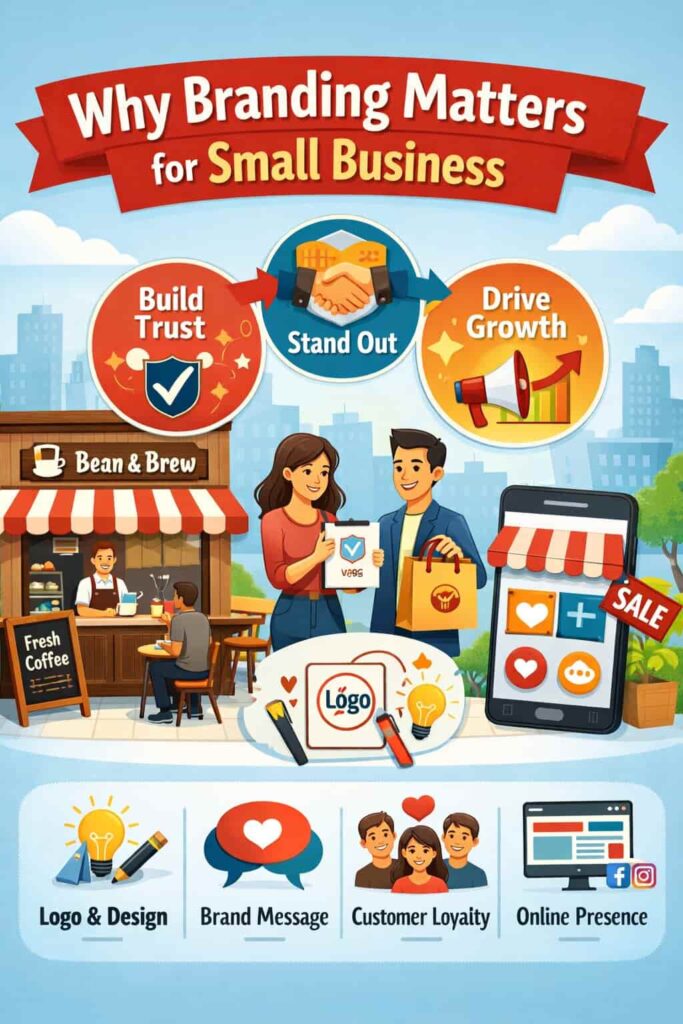
At its core, branding defines identity, builds trust, and sustains growth. It is the emotional and strategic foundation of every successful business.
- Identity: Branding communicates who you are.
- Trust: Branding builds credibility with customers.
- Growth: Branding sustains long-term success.
Whether through logos, storytelling, or digital strategies, branding matters because it transforms small businesses into lasting enterprises.
Conclusion: Why Branding Matters for Small Business
Why branding matters for small business is clear: it is the foundation of recognition, trust, and sustainable growth. Yet to truly appreciate its importance, we must look beyond the surface and understand how branding influences every aspect of a small business’s journey — from its first customer interaction to its long‑term market presence.
Branding as the Foundation of Identity
At its core, branding defines who a business is. It is not simply a logo or tagline but the strategic identity that communicates values, personality, and purpose. For small businesses, this identity is crucial because it sets them apart in crowded markets. A well‑designed branding logo or thoughtful branding design ensures that customers recognize and remember the business. Without branding, even the best products risk being overlooked.
Building Trust Through Consistency
Trust is the currency of modern business, and branding is the mechanism that builds it. Customers are more likely to engage with businesses that present themselves consistently across platforms. Whether through a website, social media, or physical storefront, branding creates a unified message. This consistency signals professionalism and reliability, making customers feel confident in their choices.
For example, a small bakery in Bangladesh that uses consistent colors, messaging, and storytelling across Facebook, Instagram, and its shop signage will naturally build stronger trust than a competitor with scattered, inconsistent branding.
Emotional Connections and Loyalty
why branding matters for small business? Branding is not just about recognition — it is about emotional connection. Customers don’t buy products; they buy into stories, values, and experiences. A strong brand tells a story that resonates with its audience.
- Personal branding allows entrepreneurs to share their journey, struggles, and successes, making customers feel part of the story.
- Emotional branding creates loyalty, turning one‑time buyers into repeat customers.
- Storytelling transforms small businesses into relatable, human brands rather than faceless entities.
This emotional bond is what sustains growth over time.
Competing in Digital Markets
In today’s digital economy, branding is inseparable from digital marketing. From local SEO services to affordable SEO services, branding integrates with every aspect of online visibility. Search engines reward businesses that present consistent branding, while social media algorithms favor engaging, branded content.
For small businesses in Bangladesh, digital branding is especially critical. With millions of users active on Facebook and Instagram, a strong brand presence ensures visibility, engagement, and conversion.
Professional Execution Through Agencies
While entrepreneurs can begin branding themselves, professional expertise often elevates the process. A branding agency brings design skills, strategic insight, and execution power. Agencies ensure that logos, websites, and campaigns are polished and aligned with business goals. For small businesses, this investment pays off in credibility and efficiency.
Branding in B2B and Global Contexts
Branding is not limited to consumer markets. In B2B, branding signals professionalism and reliability, attracting partnerships and generating leads. Strong branding communicates expertise, making small businesses more appealing to larger clients.
Globally, branding is the universal language of identity. From branding in Seongsu to entrepreneurs in Bangladesh, branding transforms local businesses into international icons. It allows small enterprises to compete on a global stage, connecting with diverse audiences across cultures.
Practical Tools and Strategies
why branding matters for small business? Small businesses can strengthen branding through practical tools:
- Branding mockups help visualize logos and campaigns before launch.
- Digital platforms like Canva, Adobe, or Figma make design accessible.
- Social media branding ensures consistent messaging across platforms.
These tools empower small businesses to create professional branding even with limited resources.
Sustaining Growth Through Branding
Ultimately, branding sustains growth. It is not a one‑time effort but an ongoing strategy. As markets evolve, branding adapts, ensuring relevance and longevity. For small businesses, branding is the key to scaling, expanding, and thriving.
- Identity: Branding communicates who you are.
- Trust: Branding builds credibility with customers.
- Growth: Branding sustains long‑term success.
Final Thoughts
Why branding matters for small business is not just a statement — it is a roadmap. By investing in branding design, logo branding, and personal branding, small businesses can compete effectively, attract loyal customers, and thrive in competitive markets.
Branding is the heartbeat of small business success. It defines identity, builds trust, and creates emotional connections that last. In Bangladesh and beyond, entrepreneurs who embrace branding are not just surviving — they are thriving, growing, and shaping the future of commerce.
Final Thoughts: Why Branding Matters for Small Business?
When reflecting on the journey of entrepreneurship, one question consistently emerges: why branding matters for small business? The answer is not only clear but essential. Branding is the foundation of recognition, trust, and sustainable growth. It is the invisible thread that connects a company to its audience, shaping perceptions, building loyalty, and ensuring long‑term success.
Branding Defines Identity
Every small business begins with an idea — a product, a service, or a solution. Yet ideas alone do not create recognition. The question why branding matters for small business? is answered by the role branding plays in transforming ideas into identity. Through branding design, logo branding, and storytelling, businesses craft a personality that customers can relate to.
A local shop in Bangladesh, for example, may sell excellent products, but without branding it risks blending into the background. With a clear logo, consistent colors, and a strong message, it becomes memorable. This illustrates perfectly why branding matters for small business? — because identity is what makes a business stand out.
Trust as the Currency of Growth
Trust is the most valuable asset a small business can earn. Customers are more likely to engage with businesses that present themselves consistently and professionally. This is another reason why branding matters for small business? Branding signals reliability, making customers feel confident in their choices.
Consider an e‑commerce seller on Daraz. By investing in packaging, social media presence, and consistent messaging, they build credibility. Competitors who neglect branding struggle to earn trust. This demonstrates that why branding matters for small business? is not a theoretical question but a practical reality.
Emotional Connections and Loyalty
Branding is not just about recognition; it is about emotional connection. Customers don’t simply buy products; they buy into stories, values, and experiences. This emotional bond explains why branding matters for small business?
- Personal branding allows entrepreneurs to share their journey, struggles, and successes.
- Emotional branding transforms one‑time buyers into loyal advocates.
- Storytelling ensures businesses are remembered for what they stand for, not just what they sell.
A small café in Dhaka, for instance, can compete with larger chains by building emotional loyalty through branding. This is yet another example of why branding matters for small business?
Competing in the Digital Economy
In today’s digital economy, branding is inseparable from digital marketing. From local SEO services to affordable SEO services, branding integrates with every aspect of online visibility. Search engines reward businesses with consistent branding, while social media platforms favor engaging, branded content.
For small businesses in Bangladesh, digital branding is especially critical. With millions of users active on Facebook and Instagram, a strong brand presence ensures visibility, engagement, and conversion. This underscores why branding matters for small business? — because digital branding is the bridge between ambition and audience.
Professional Execution and Global Reach
While entrepreneurs can begin branding themselves, professional expertise often elevates the process. A branding agency brings design skills, strategic insight, and execution power. Agencies ensure that logos, websites, and campaigns are polished and aligned with business goals.
Globally, branding is the universal language of identity. From branding in Seongsu to entrepreneurs in Bangladesh, branding transforms local businesses into international icons. This global perspective reinforces why branding matters for small business? — because branding allows even small enterprises to compete on a worldwide stage.
Sustaining Growth Through Branding
Ultimately, branding sustains growth. It is not a one‑time effort but an ongoing strategy. As markets evolve, branding adapts, ensuring relevance and longevity. For small businesses, branding is the key to scaling, expanding, and thriving.
- Identity: Branding communicates who you are.
- Trust: Branding builds credibility with customers.
- Growth: Branding sustains long‑term success.
This cycle of identity, trust, and growth answers once again why branding matters for small business?
Closing Reflection
So, why branding matters for small business? Because it is the difference between being seen and being forgotten, between surviving and thriving. By investing in branding design, logo branding, and personal branding, small businesses can compete effectively, attract loyal customers, and grow sustainably.
Branding is not just decoration — it is strategy, identity, and emotion. It defines who you are, builds trust with your audience, and creates emotional connections that last. In Bangladesh and beyond, entrepreneurs who embrace branding are not just surviving; they are thriving, growing, and shaping the future of commerce..
Read more
Follow us: